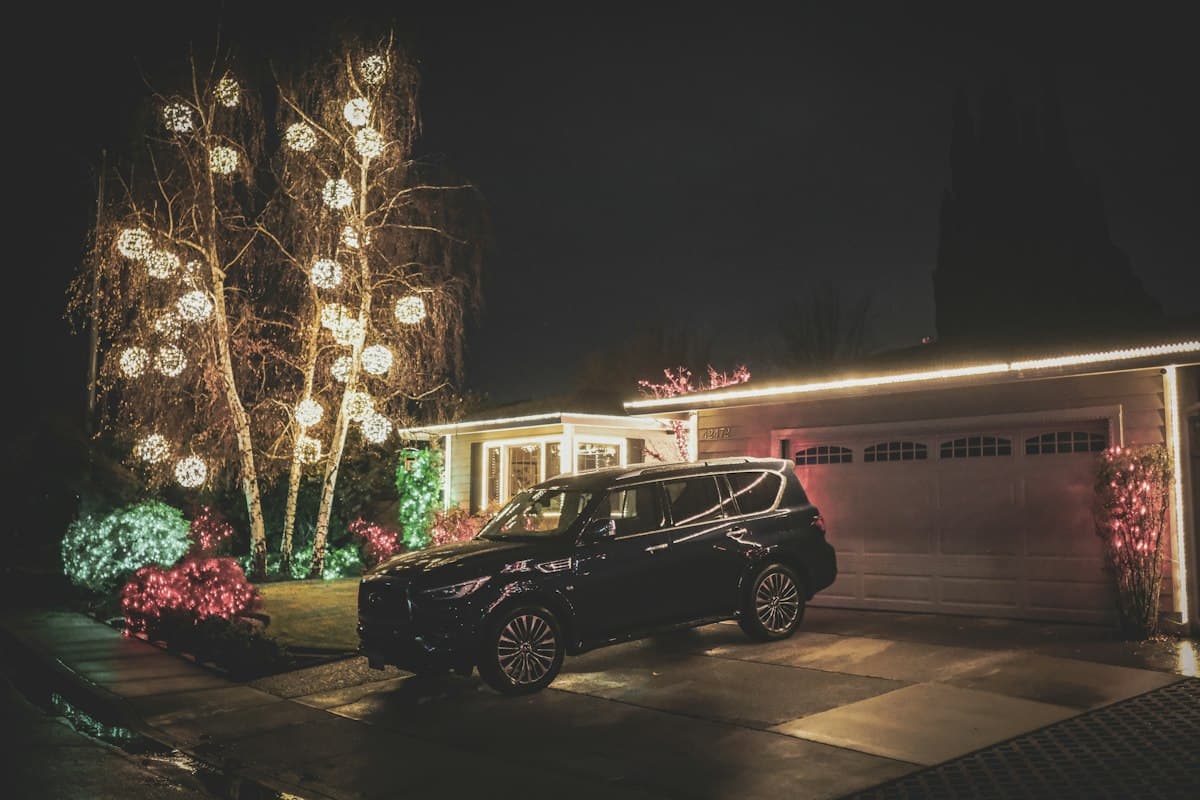
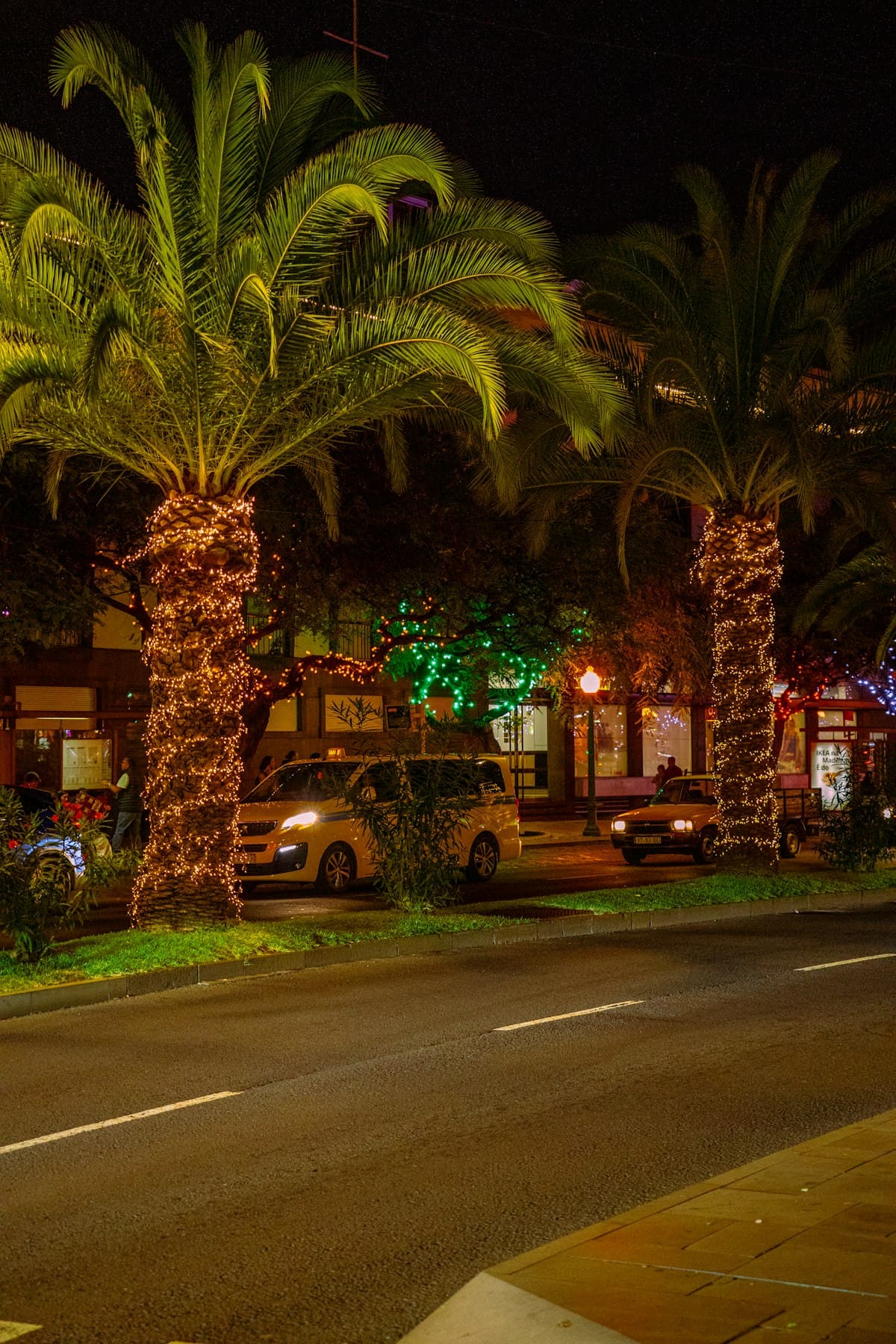
Up north, the holiday centerpiece is an evergreen. Here, it's a palm. A row of evenly wrapped trunks glowing along a driveway is the look people picture when they think of Christmas in Miami — and it's also the display where the gap between a careful job and a rushed one is most obvious.
Here's what goes into a wrap that looks good from the street.
Spacing is everything
The single biggest factor in how a wrapped palm looks is the distance between each pass of the light strand as it spirals up the trunk.
- Tight spacing makes the trunk read as a solid column of light. It's the premium look, and it uses a lot more lights.
- Wide spacing reads as a visible spiral. It can look fine on a slim trunk, but on a thick one it tends to look sparse.
Whatever spacing you choose, it has to be consistent from the bottom of the trunk to the top. A wrap that starts tight and drifts wider as the installer gets tired is the most common sign of a rushed job. From the street, uneven spacing is all you see.
Trunk only, or trunk and fronds?
There are two levels of coverage:
- Trunk wrap. Lights spiral up the trunk and stop below the crown. Clean, classic, and the most popular choice.
- Full wrap. The trunk plus lights carried out along the fronds, so the whole tree is outlined. It's dramatic, but it takes more material and more time at height.
For a row of palms, a consistent trunk wrap on every tree usually looks better than a full wrap on one and nothing on the rest. Repetition is what makes a driveway or property line look intentional.
Different palms, different approach
Not every palm wraps the same way:
- Royal palms have smooth, tall, column-like trunks. They wrap beautifully, but their height means the top of the wrap is well out of ladder range.
- Coconut palms often lean and curve, so the spiral has to follow the trunk rather than fight it.
- Date palms have thick, heavily textured trunks that take far more light to cover than their height suggests.
- Smaller ornamental palms are easy to reach but easy to overdo; a little light goes a long way.
How the lights are attached matters
A palm trunk is not like the trunk of an oak. Palms can't heal over a wound the way hardwood trees can — damage to the trunk is permanent. That's why lights should be held by the tension of the wrap itself and secured with ties, never with nails, staples, or screws driven into the tree.
It's also why takedown matters. Lights left wrapped around a palm for months collect moisture and debris against the trunk. A proper service removes everything after the season.
The right lights for the job
Palm wraps are done with LED mini lights rather than the large C9 bulbs used on rooflines. Minis sit close to the trunk and give that smooth, continuous glow. LEDs also run cool and draw very little power, which matters when a single tall trunk can carry a lot of strands. (More on which bulb goes where in our C9 vs. mini lights guide.)
Color is a matter of taste. Warm white is the classic, pure white reads crisp and modern, and multicolor is the most playful. The one rule: match the palms to the rest of the display so the property reads as one design.
Should you do it yourself?
A short ornamental palm by the front door is a reasonable DIY project. A row of tall royals is not — the work happens well above safe ladder height, and it takes a surprising amount of lights and patience to keep the spacing even all the way up.
If you'd rather hand it off, see our palm tree lighting service. Add your palms in the instant quote and you'll see the price right away, with installation, maintenance, and January takedown included.