Walk down the holiday aisle and every box says "Christmas lights." But the lights that make a roofline look sharp are not the same ones that make a palm trunk glow, and using the wrong type in the wrong place is one of the main reasons a display looks off without anyone being able to say why.
Here's the short version of what goes where.
C9 bulbs: the roofline light
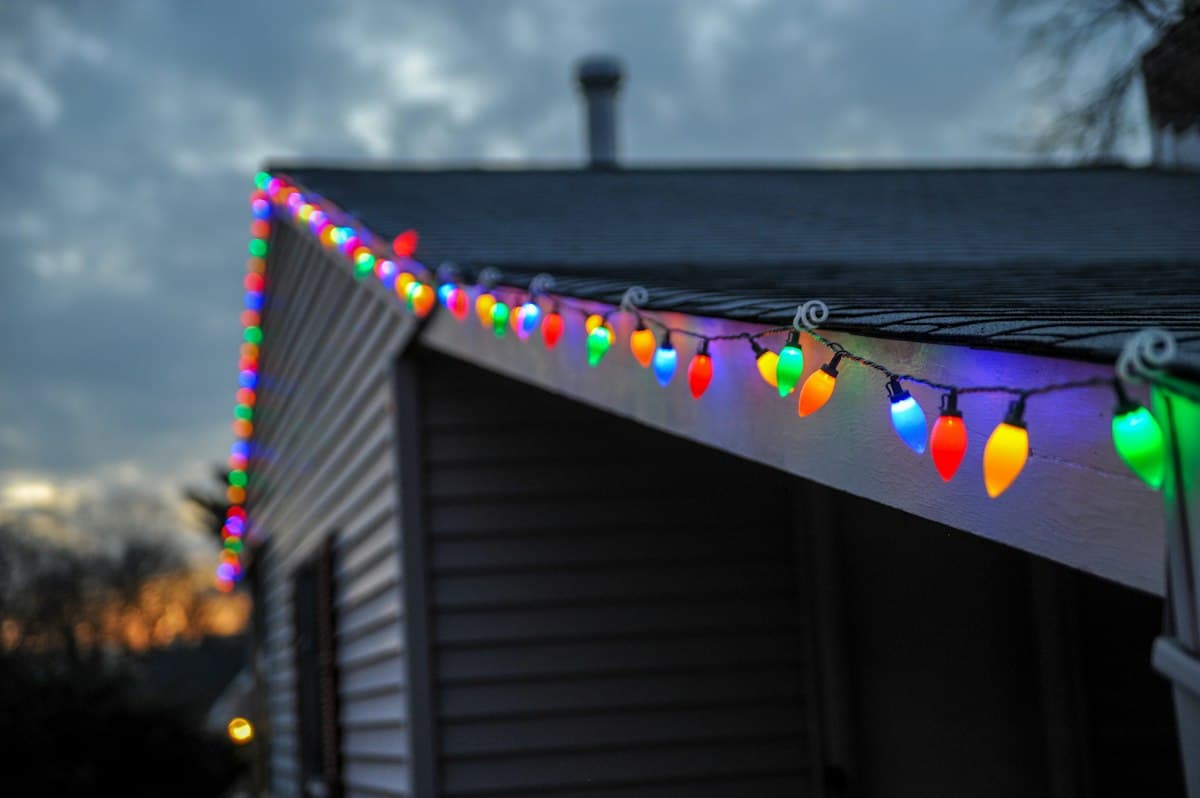
C9s are the large, classic bulbs — the ones you can count individually from the street. Each bulb sits in its own socket, spaced evenly along a line.
They're the standard for rooflines, ridgelines, and gables because their size reads clearly from a distance. A row of C9s traces the architecture of a house in a way small lights can't: the outline is bold, the spacing is visible, and the line looks deliberate.
Professional installs typically use bulbs and socket wire as separate components. That lets the installer cut each run to the exact length of an eave, so there's no leftover strand bunched at the end and no dark gap where one string stops and the next begins.
Best for: rooflines, ridgelines, peaks and gables, driveway and pathway borders.
Mini lights: the wrapping light
Mini lights are the small bulbs on a continuous strand. Up close they're individual points; from a distance, lots of them blend into a glow.
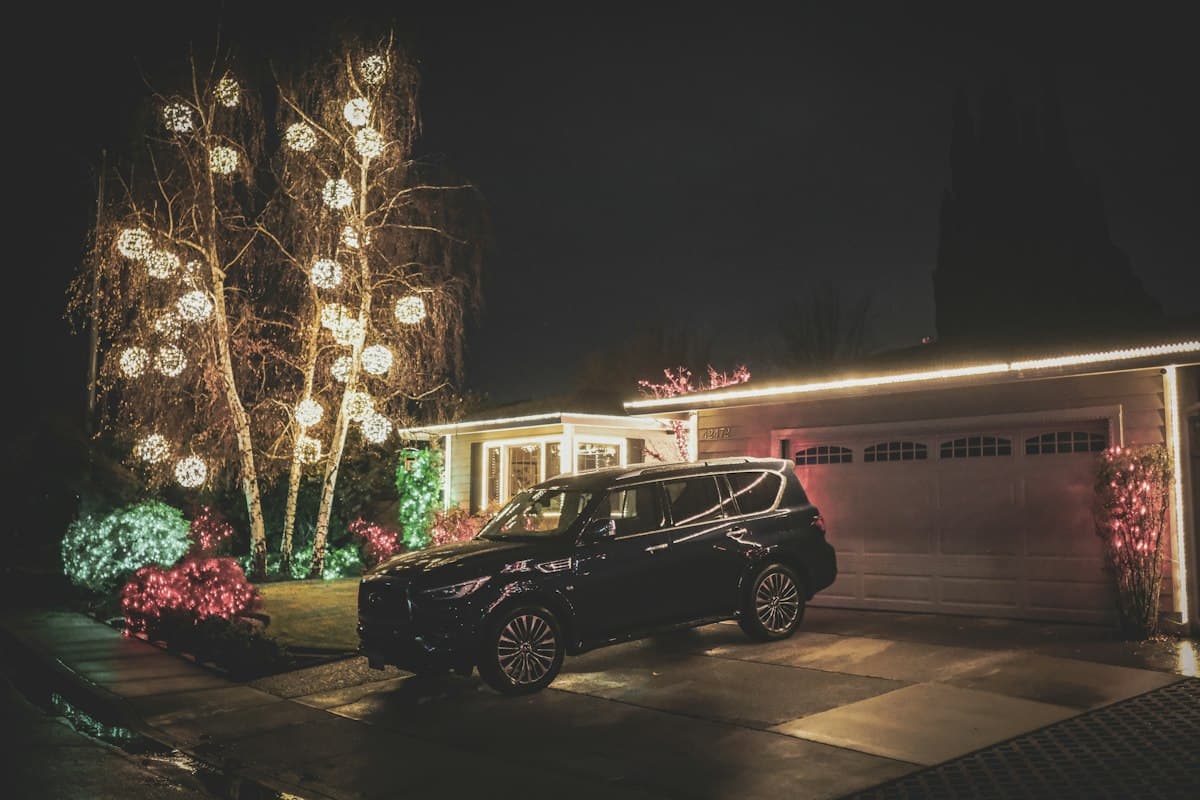
That blending is exactly what you want when you're covering a surface rather than drawing a line. Wrapped around a palm trunk or woven through a hedge, minis make the whole shape light up.
Best for: palm and tree trunks, branches and canopies, hedges and bushes, wreaths and garland.
Why not just use one kind everywhere?
Because each one fails at the other's job:
- Minis on a roofline look thin and sag between attachment points. From the street the line reads as faint and wobbly.
- C9s on a trunk leave big dark gaps between bulbs, and the large bulbs stick out awkwardly instead of sitting flush.
A display that looks professionally designed almost always uses both: C9s to outline the house, minis to fill the landscape.
LED or incandescent?
For outdoor displays, LED has become the default for good reasons:
- Far less power. LEDs use a small fraction of the electricity of incandescent bulbs, so you can run a much larger display from the same outlet.
- They run cool, which matters when lights are against foliage or wrapped around a trunk.
- They're durable. LED bulbs are typically plastic rather than glass, so they survive handling, wind, and the occasional falling palm frond.
Early LEDs had a harsh, bluish tint that put many people off. Modern warm white LEDs are a close match for the glow of traditional bulbs.
Choosing a color
There are three common directions:
- Warm white. Soft and golden. The most timeless choice, and the one that flatters almost any home.
- Pure white. Brighter and cooler. A crisp, modern look that suits contemporary architecture.
- Multicolor. Classic and playful. The traditional red, green, blue, and yellow mix.
One practical tip: "white" varies from one product line to the next. Mixing lights from different sources often leaves you with whites that don't quite match once they're side by side at night. Keeping everything from one consistent source avoids that.
Does store-bought versus commercial-grade matter?
Retail light sets are built to a price and designed for a season or two of light use. Commercial-grade lights have sturdier wire, better-sealed sockets, and more consistent color from bulb to bulb. In South Florida's sun, rain, and humidity, that difference shows up quickly.
It's one reason our service supplies the lights: every display uses commercial-grade materials, we maintain them through the season, and you never have to buy, store, or untangle anything.
The takeaway
Outline with C9s, fill with minis, pick one white and stick with it. If you'd rather not think about any of it, get an instant quote — you choose the look, and we handle rooflines, palms, and everything in between.