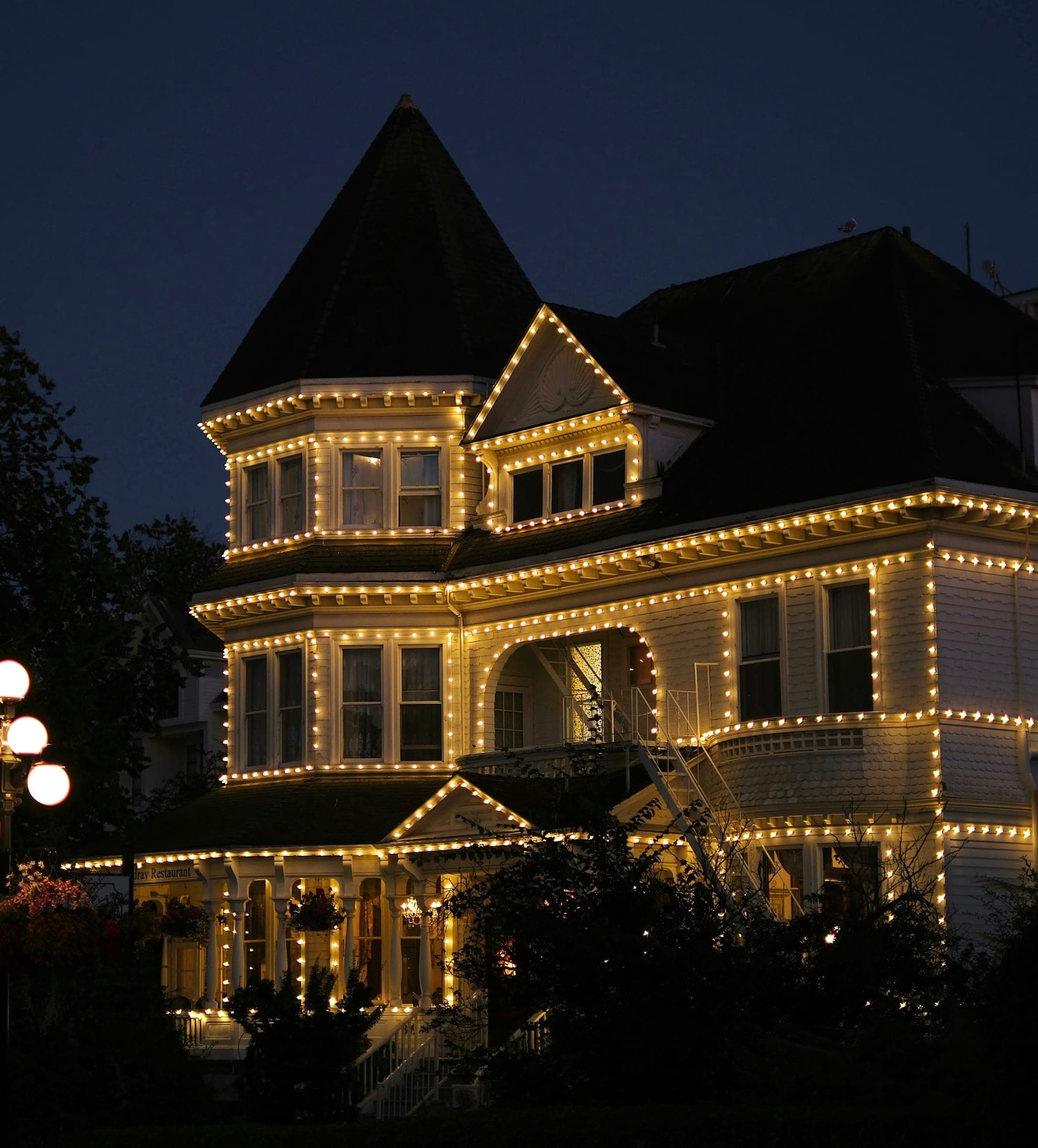
Christmas lights are one of the best parts of the season, and one of the most common reasons people end up on a ladder they haven't touched all year. Whether you're hanging your own or hiring a crew, these are the safety basics for a South Florida home.
Ladders: the biggest risk
Falls from ladders are the most serious holiday-decorating injury. A few rules cover most of it:
- Use the right ladder. An extension ladder that reaches at least a few feet past the roof edge for rooflines; a stepladder only for low work. Never stand on the top rungs.
- Set it on firm, level ground. Soft lawn after a shower is not firm ground. Pavers and mulch beds shift.
- Keep three points of contact. Two feet and a hand, always. Carry lights in a bag or on a hook, not in your arms.
- Have someone hold it. Every time.
- Move the ladder instead of leaning out to reach. Your belt buckle should stay between the rails.
- Stay off it in wind or rain, and don't work on a ladder at dusk when you can't see well.
Don't walk on tile roofs
Barrel and flat tile cover a huge share of roofs in Miami-Dade and Broward. Tiles crack under foot traffic, and a cracked tile is a leak waiting for the next storm — plus tile is slippery, especially with dew. Light a tile roofline from a ladder at the eave, with clips made for tile.
Never nail, screw or staple
Nails and staples damage your fascia and gutters, can pierce the wire insulation, and leave holes that let water in. Use plastic clips designed for gutters, shingles or tile. They hold better and come off cleanly.
Power and outlets
- Plug only into outdoor outlets with GFCI protection and an in-use cover.
- Use outdoor-rated extension cords, and as few as possible.
- Don't chain more strands end to end than the label allows.
- Keep plug connections off the ground and out of puddles and gutters.
- Never run cords through windows or doors where they'll be pinched.
- If an outlet trips repeatedly, find out why. Don't bypass it.
More on keeping water out of connections in our weatherproofing guide.
LED vs. incandescent
LED Christmas lights run cool to the touch, use far less power, and let you run more strands on one circuit. Old incandescent strands get hot, which matters around dry palm fronds, mulch and anything a child might grab. If you're still using incandescent strands, this is a good year to retire them.
Inspect before you hang
Before anything goes up, plug every strand in on the ground. Throw out any with:
- cracked or brittle wire,
- broken or loose sockets,
- melted or bent plugs.
It's much easier to find a dead section on the driveway than at the top of a ladder.
Palms and trees
Climbing a palm to wrap it is not a DIY job. Wrap what you can reach from the ground or a stepladder, and keep lights clear of dead fronds. Our palm tree guide explains how the pros do the tall ones.
Kids, pets and walkways
- Keep cords out of walkways, or cover them where people cross.
- Secure pathway stakes so they can't be pulled up and tripped over.
- Keep low strands and connections out of reach of pets that chew.
Use a timer
A timer means the lights are only on when you want them, and nobody has to remember to unplug them at night. Dusk-to-dawn timers are cheap and worth it.
The safest option: stay on the ground
If your home is two stories, has a tile roof, or has tall palms, the simplest safety tip is to let an insured crew handle the heights. With us, the whole job is covered — commercial-grade LED lights, tile-safe clips, a dusk-to-dawn timer, repairs within 48 hours all season and takedown in January — and you never climb a thing.
Thinking about doing it yourself anyway? Read our honest DIY vs. professional comparison first, or see your price with our instant quote.
Rather skip the homework?
See your price in about two minutes
Tell us what you'd like lit and the quote shows your all-in seasonal price right away — design, commercial-grade lights, installation, maintenance and January takedown included.